Minimalist Style Done Right: Brands, Pieces, and What to Skip
The wardrobe edit you’ve been putting off won’t fix itself with another beige purchase.
Minimalist fashion has been misrepresented as “buy less, wear neutral colors.” That’s not wrong — it’s just incomplete in a way that leads to closets full of sand-colored items that somehow still don’t work together. The actual principle is precision: every piece earns its place through cut, fabric, or function — preferably all three. This guide covers what makes minimalism actually work, which brands deliver it at which price points, and where most people quietly go wrong.
What Makes Minimalist Fashion Actually Work
Minimalism in fashion didn’t come from decluttering influencers. It emerged from two distinct design traditions: Japanese conceptual dressing — Issey Miyake, Yohji Yamamoto, Rei Kawakubo — and Scandinavian function-first design. Both schools stripped away decoration, but for different reasons. Japanese minimalism was a philosophical statement about form and negative space. Scandinavian minimalism was about durability and utility.
What both traditions share: nothing exists in the outfit purely for decoration. If a detail is present, it serves a structural or aesthetic purpose. That is the real definition, and it’s more demanding than people expect.
Why “Simple” Is Harder to Execute Than Elaborate
Maximalist dressing has a structural advantage most people don’t think about: visual noise hides small errors. A pattern-heavy outfit obscures a shoulder seam that sits slightly off, or trousers that pull at the hip. Minimalism offers no such cover.
This is why minimalist clothing demands more precision in fit than almost any other style. A half-inch off on the shoulder seam. A fabric that wrinkles by noon. A shade of white that reads yellow under office lighting. These are visible problems in a plain outfit in a way they’d disappear entirely in a printed blouse. The bar is higher, and that’s the point.
How Proportion Creates Visual Interest Without Pattern
The most versatile minimalist silhouette isn’t a formula you purchase — it’s a proportion relationship you choose deliberately. Loose on top, straight or tapered on the bottom reads as intentional. The inverse works too. What fails: fitted everything (that’s businesswear, not minimalism) or loose everything without a structure anchor like a sharp shoe or belt.
Proportion contrast — not color contrast, not print — is what gives minimalist outfits their visual tension. Once you understand this, you stop needing statement pieces to feel dressed.
The 8 Pieces That Form a Real Minimalist Wardrobe
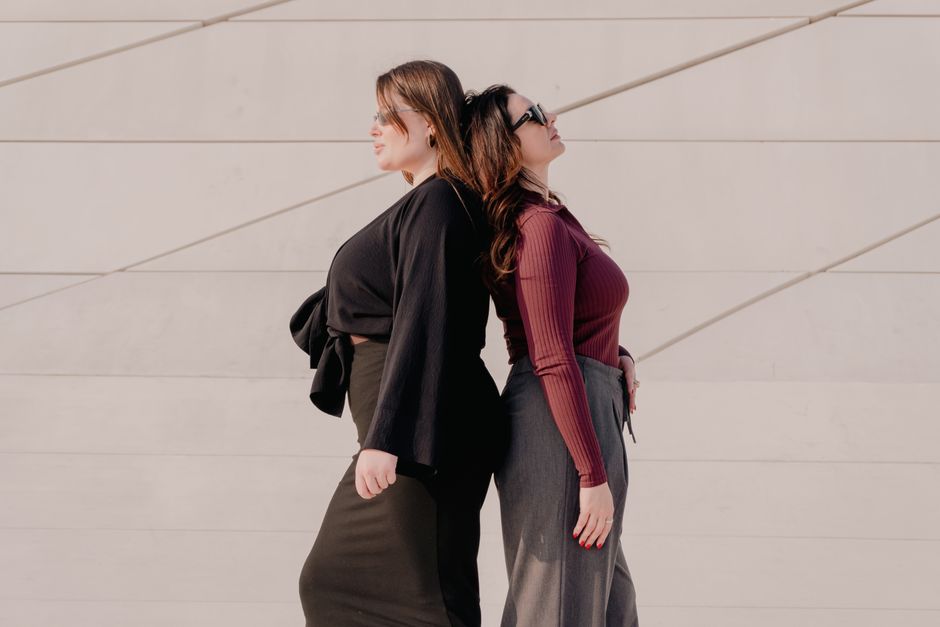
These eight items were chosen for combinatorial efficiency. Each one pairs with at least five others in this set, producing 40-plus outfit combinations without overlap. The goal is maximum options from minimum pieces — but only if each piece is exactly right.
The Clothing Layer: Four Non-Negotiables
- Straight-leg trousers in sand or camel — warm neutral tones read as intentional in a way cool grey rarely does. Look for fabric with some drape rather than rigid structure.
- Wide-leg trousers in charcoal or dark navy — the evening-capable alternative. The COS Wide Straight Trousers in dark navy ($129) are a consistent reference point for silhouette and weight.
- A white or ivory cotton poplin shirt — the COS Relaxed Fit Poplin Shirt ($79) is the clearest benchmark in this category. If it hangs off the shoulder cleanly without pulling, the fabric weight is right.
- A fine-knit merino crewneck — Uniqlo’s Extra Fine Merino Crew Neck ($40) outperforms most options three times its price. It layers over the shirt or stands alone equally well.
The Outerwear and Footwear Layer: Four More
- A structured blazer — unlined or lightly structured for drape over stiffness. Arket’s linen and wool blazers ($259–$299) hold their shape through a full day without looking stiff by 3pm.
- A longline coat — one excellent coat worn 100-plus days earns its price per wear. The & Other Stories Oversized Wool Blend Coat ($275) regularly sells out. The silhouette anchors everything underneath it.
- White or off-white leather trainers — not chunky. Veja Campo ($160) and New Balance 327 in mono white ($90) both age cleanly. Chunky trainer silhouettes undercut the proportion logic of most minimalist outfits.
- Leather loafers or pointed flats — black or cognac. Mango and Arket both carry solid options under $100 that last multiple seasons with basic care.
Eight pieces. All precise. If your wardrobe already has four versions of “a white shirt,” you don’t need more options — you need a better shirt.
Three Types of Minimalism: Which One Are You Actually Dressing?
Most style confusion in minimalist dressing comes from mixing aesthetic references without realizing they operate on entirely different visual logic. Japanese, Scandinavian, and French minimalism look distinct, require different pieces, and suit different lifestyles.
| Style | Core Principle | Color Range | Key Brands | Cost to Build |
|---|---|---|---|---|
| Japanese Minimalism | Asymmetry, draped volume, intentional imperfection, architectural silhouettes | Black, white, raw linen, charcoal | COS, Lemaire, Toteme | $800–$2,500 |
| Scandinavian Minimalism | Function-first, natural materials, clean structured lines | Sand, bone, stone grey, sage green | Arket, Filippa K, & Other Stories | $600–$1,800 |
| French Minimalism | Effortless but deliberate, body-aware, understated luxury | Navy, ecru, burgundy, camel | A.P.C., Sézane, Isabel Marant Étoile | $700–$2,000 |
Which Type Fits Your Life
Scandinavian minimalism is the most wearable across professional and casual settings — and the most forgiving for people new to the aesthetic. Japanese minimalism has the highest payoff when executed well, but architectural silhouettes require a real understanding of proportion before they stop looking like you grabbed the wrong size. French minimalism is the most universally flattering, but it depends entirely on having quality basics underneath.
Choose one reference point and build from it. The mix-and-match approach can work eventually, but only after you’ve internalized each aesthetic individually first. Most minimalist misfires come from blending references before understanding either one.
When Mixing Aesthetics Works (and When It Doesn’t)
A Scandinavian-cut coat over French basics — navy wide-leg trouser, merino crewneck, clean trainer — works because the proportions share the same language. What fails: a Japanese deconstructed top over fitted French trousers with Scandinavian earth tones. The references pull against each other without a unifying logic.
The rule: mixing aesthetics works when the silhouette relationship stays consistent, even if the brands aren’t from the same tradition.
Best Minimalist Fashion Brands Across Every Budget
| Brand | Price Range | Best For | Weakness |
|---|---|---|---|
| Uniqlo | $20–$100 | Merino basics, Oxford shirts, tailored trousers | Cuts run boxy; some fabrics look cheap on camera |
| COS | $60–$300 | Architectural basics, shirts, knitwear with strong silhouettes | Sizing varies season to season — always size check |
| Arket | $80–$350 | Natural fibers, Scandinavian silhouettes, outerwear | Limited extended size range in some styles |
| Sézane | $80–$300 | French basics, knitwear, relaxed tailoring | Runs small; popular items sell out fast |
| A.P.C. | $150–$600 | Investment denim, structured bags, coats | Cotton basics feel expensive for the quality delivered |
| Toteme | $300–$900 | Premium knitwear, scarves, wardrobe staples | High cost; designs change minimally year to year |
| Everlane | $40–$200 | Cotton basics, relaxed denim, shoes | Quality has declined post-2026; read current reviews before buying |
Where to Start If You Have Under $200
Uniqlo first. Merino crewneck, Oxford shirt, straight trousers. These three items together produce a complete working outfit and form the backbone of almost any minimalist direction you take afterward. Then one COS piece — a shirt or knit — to add a more architectural silhouette. This combination costs roughly $130–$180 and covers more outfit territory than most wardrobes twice the size.
When to Invest More
Two categories earn the higher spend: coats and shoes. A coat from Arket or & Other Stories at $250–$350 is visible in every winter outfit. A leather shoe from Veja or a quality loafer is worn 80-plus times a year. The cost-per-wear math works. Investing $300 in a fourth black t-shirt never does. Toteme and A.P.C. are valid once you know exactly what you need — not starting points. Buying expensive basics before understanding your proportions wastes the quality advantage they offer.
The Mistakes That Quietly Wreck a Minimalist Wardrobe
Three patterns. First: neutrals with conflicting undertones — warm sand and cool grey don’t harmonize, and plain fabrics make the tension visible in a way prints never would. Second: ignoring fabric weight, which creates tonal clashes that patterned clothing hides effortlessly. Third — and most common — treating minimalism as a shopping strategy rather than an editing one. If your “minimalist” wardrobe has grown to 60 items, the original logic failed somewhere along the way.
Why Fabric Weight and Fit Matter More Than Brand Name
This is the section most minimalist style guides skip. It’s also the most important one.
Fabric weight determines movement. A 180gsm cotton poplin shirt drapes off the shoulder and holds structure through an eight-hour day. A 120gsm version clings, creases within two hours, and reads as a basic regardless of the label sewn into it. Both shirts can be white. Both can share the same cut. The weight difference is what creates the visible gap between expensive-looking and just plain.
Fabric Specifications Worth Knowing Before You Buy
These numbers aren’t obscure technical details — they’re the difference between a piece that lasts four seasons and one that looks worn after three washes.
- Cotton shirts: 160–200gsm for shirts you want to hold shape. Anything under 140gsm wrinkles fast and clings in unflattering ways by midday.
- Knitwear: Merino over acrylic, without exception. Acrylic pills within six to eight weeks of regular wear. A $40 Uniqlo merino outlasts a $20 acrylic sweater by years and looks sharper the whole time.
- Trousers: Look for 3–5% elastane in woven fabric to prevent rigid, cardboard movement. Pure woven cotton in a wide leg can look stiff in the wrong direction.
- Coats: Minimum 60% wool for warmth-to-weight balance. Polyester “wool-look” coats flatten at the shoulders and lose their silhouette after 20 wears.
The Fit Rule That Overrides Everything Else
No brand or price point compensates for a fit problem. A $350 shirt that sits incorrectly at the shoulder reads worse than a $70 shirt that fits perfectly. Shoulder seams must land exactly on the shoulder point — not a half-inch inward, not a half-inch over. This is the single most visible fit indicator on any top or jacket. Most people accept close enough. In minimalist dressing, close enough shows.
Trouser length is the second critical marker. Straight and wide-leg trousers should hit at the top of the shoe — not pooling on the floor, not flooding above the ankle. A $12 hem alteration at any local tailor fixes this permanently. Resisting that spend is a false economy on a $120 trouser you wear three times a week.
If you’re between sizes, size up and tailor in. Taking in a waist or shortening a hem costs less than $30 and produces results that read as custom. Alterations on a structured blazer are more complex — in that case, find the right size or try a different brand rather than trying to rework the shoulder structure.
Building Your First Minimalist Wardrobe: The Actual Numbers
Here’s a concrete, purchasable starting wardrobe. These pieces work together, cover casual through smart-casual, and require no guesswork.
| Item | Product | Price (USD) |
|---|---|---|
| White shirt | COS Relaxed Fit Poplin Shirt | $79 |
| Fine-knit sweater | Uniqlo Extra Fine Merino Crew Neck | $40 |
| Straight trousers | Arket Straight Tailored Trousers in sand | $110 |
| Wide-leg trousers | COS Wide Straight Trousers in navy | $129 |
| Leather trainers | New Balance 327 Mono White | $90 |
| Loafers | Mango Square Toe Leather Loafer | $80 |
| Longline coat | & Other Stories Oversized Wool Blend Coat | $275 |
| Total | $803 |
The Priority Order If You Can’t Buy Everything at Once
Start with the COS shirt, the Uniqlo merino, and one trouser. Wear those three together for 30 days. After a month of dressing with limited options, you’ll know exactly what the wardrobe is missing — not what you think it’s missing before you’ve tested it.
What to Wait On
The coat. It’s the most visible and most expensive purchase. Don’t rush it. Use whatever coat you already own for a full season while the rest of the wardrobe takes shape. The right coat bought slowly is more useful than the first acceptable one bought immediately. For most people starting from nothing, the COS Relaxed Poplin Shirt, Uniqlo Extra Fine Merino Crew Neck, and Arket straight trousers are the highest-return first purchases — three items, under $230, and a clear visual direction. Everything else is refinement.