First Management Role Wardrobe: A 2026 Plan
A common misconception is that becoming a manager means buying a closet full of formal suits. Most new managers need something more useful: a small wardrobe that looks sharper than everyday office wear, works across meetings and desk days, and still feels like them. The goal is visible readiness, not expensive costume dressing.
This is not legal advice — consult a licensed attorney. Workplace dress rules vary by employer, industry, location, and state.
What changes when you become a manager?
The misconception about looking senior
Leadership style does not come from wearing the most expensive label in the room. It comes from looking prepared, consistent, and comfortable enough to focus on people and decisions. A manager often moves between private conversations, presentations, client calls, and informal team moments in one day. Clothing that only works for a formal meeting creates extra friction.
The signal your wardrobe should send
Your clothes should show that you understand the setting and respect other people’s time. Clean lines, good fit, quiet color, and reliable shoes do that better than loud trends. The strongest first management role wardrobe has enough structure to look intentional but enough ease to avoid appearing distant. My verdict: build around polished separates rather than a full suit rotation, unless your workplace clearly requires suits.
Which 12 pieces earn their place?
The core eight
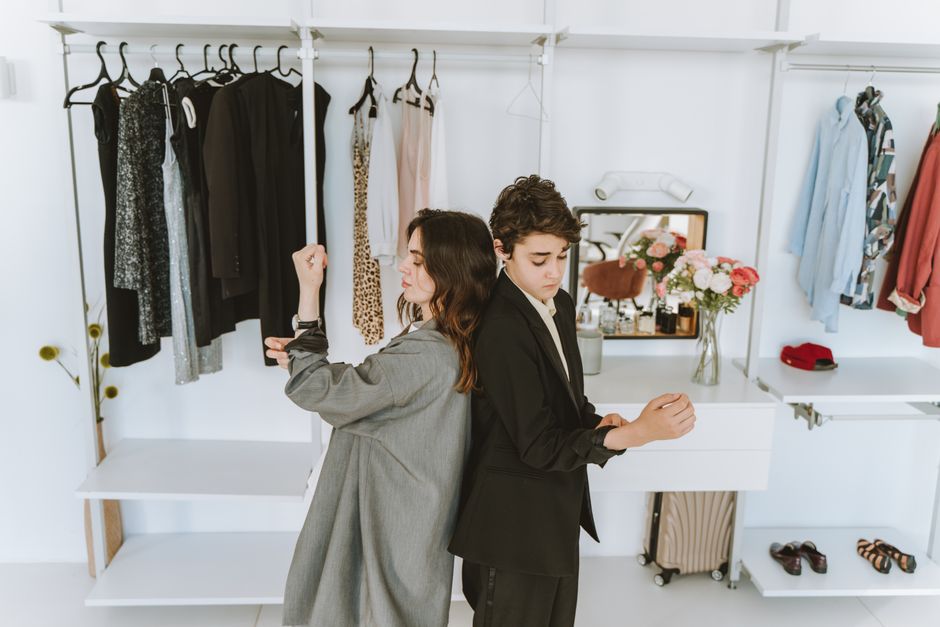
Start with these pieces in navy, charcoal, black, ivory, white, camel, or a muted blue. They can create at least two weeks of distinct outfits when the colors work together.
- One navy or charcoal blazer with a clean shoulder line.
- One softer blazer or cardigan jacket for relaxed offices.
- Two pairs of tailored trousers in different neutral colors.
- One pair of straight-leg or wide-leg trousers for variety.
- Two crisp shirts, one white and one pale blue.
- One fine-gauge crewneck or V-neck knit.
- One simple midi dress with sleeves or a layer-friendly neckline.
- One dark, non-distressed pair of jeans if the office allows denim.
The useful four
Add one pair of loafers, one pair of low block-heel shoes or refined flats, a structured tote, and a narrow belt. The belt should coordinate with at least one shoe. My verdict: buy the second pair of trousers before buying a statement jacket. Trouser variety creates more usable outfits and reduces the risk of repeating the same silhouette every day.
How should a new manager judge fit and fabric?
Fit comes before the label
Try on every key piece while standing, sitting, reaching, and raising both arms. A blazer should close without pulling across the bust, while the shoulder seam should sit close to the edge of your shoulder. Sleeves usually look polished when they end near the wrist bone. Trousers should skim rather than cling, and the waistband should stay flat when you sit. If the waist fits but the hem does not, buy for the larger measurement and budget for alterations.
Fabric controls your workday
Choose fabrics that hold their shape after several hours. Wool blends, ponte, cotton poplin, washable viscose blends, and fabrics with a small amount of elastane can work well. Avoid thin fabric that turns transparent under office lighting, noisy polyester that catches on chair arms, and heavy knits that become uncomfortable in heated rooms. A garment that needs constant adjustment distracts you and can make a confident outfit look uncertain.
Color should support repetition
Use two dark neutrals, one light neutral, and one accent color. Navy and charcoal are often easier to repeat than stark black because they look less severe with shirts and knits. A muted burgundy, forest green, or cobalt blouse adds personality without making every outfit memorable for the wrong reason. My verdict: prioritize fabric recovery and fit over a designer name. A $90 trouser that stays smooth can serve you better than a $300 pair that bags at the knees.
What can you buy at three realistic budget levels?
Use price as a planning tool
Prices change by season and sale, so treat the figures below as working ranges rather than permanent quotes. These examples are included for reference only and use no affiliate links. The right purchase is the one that fills a clear gap in your rotation.
| Budget | Best first purchases | Expected result |
|---|---|---|
| $250-$400 | Two trousers, two tops, one cardigan jacket, simple flats | Five to seven office outfits |
| $500-$800 | Add a structured blazer, loafers, dress, and tote | Reliable rotation for most business-casual offices |
| $900-$1,400 | Add tailoring, a second blazer, premium knit, and better shoes | Polished rotation for meetings and presentations |
Useful benchmark pieces
The UNIQLO Smart Ankle Pants use a 64% polyester, 28% rayon, and 8% spandex blend in one current version, with two-way stretch and sizes from XXS to XXL. The Everlane Blazer in Tailor Twill lists a 52% wool, 46% recycled polyester, and 2% elastane shell, with a $278 original price shown on the product page. Those details make the pieces easy to compare, even if you choose different brands.
Which wardrobe mistakes make a new manager look less prepared?
Five problems to remove first
- Buying five tops before owning trousers that fit correctly.
- Wearing a blazer with sleeves that cover the hands.
- Choosing shoes that look polished but hurt after one hour.
- Wearing a new outfit for an important presentation without testing it.
- Copying the dressiest person in the company instead of reading the actual office norm.
The repair plan
Before your first week, sit in each outfit for 20 minutes, walk up stairs, and check for gaping buttons, slipping straps, noisy fabric, or hems that catch under your shoes. Remove temporary stitching from pockets and vents. Keep a small kit with a lint roller, stain pen, safety pins, and blister plasters. My verdict: the biggest mistake is treating discomfort as a character test. If you cannot move naturally, replace or alter the item.
When should you choose a lower-cost alternative?
Do I need a premium blazer?
No. Buy a premium blazer only when you know the cut suits your body and you will wear it at least twice a month. A less expensive blazer with a good shoulder fit can look stronger than an expensive oversized style that swallows your frame. The Everlane blazer is a useful wool-blend reference, but it is not a requirement for credibility.
Is cashmere worth adding?
The Quince Mongolian Cashmere Crewneck Sweater can work as a soft layer, but cashmere is not automatically the best choice. It needs careful washing, can pill, and may feel too warm in a heated office. A washable merino or cotton knit is the better choice for frequent wear. For shoes, the Cole Haan Grand Ambition 2.0 Loafer has been listed around $158 before sales, but a comfortable leather loafer from another brand can meet the same need. My verdict: spend more on fit and footwear comfort, not fiber prestige.
What should you wear during the first month?
Use a simple weekly rhythm
Wear the most conservative outfit on your first day: dark trousers, a light shirt, a structured layer, and comfortable closed shoes. Use the first week to observe how senior colleagues dress for ordinary work, client meetings, and casual Friday. In week two, add one personal detail such as a colored knit, small earrings, a patterned scarf, or a modern shoe shape. Keep the rest of the outfit quiet.
Choose the right formula for the setting
For a formal office, use a blazer and matching trousers at least once each week. For business casual, pair tailored trousers with a knit and loafers. For a creative workplace, keep the clean trousers and layer but allow more color or shape. Do not treat denim as a promotion uniform unless the team already wears it. The strongest choice for most new managers is a repeatable outfit formula that feels one step more polished than the team’s daily baseline.
| Work setting | Best formula | Clear verdict |
|---|---|---|
| Formal | Matching suit, shirt, closed shoe | Choose structure first |
| Business casual | Blazer, tailored trousers, knit, loafer | Best all-purpose starting point |
| Creative casual | Clean trousers, expressive top, refined flat | Add personality through color |