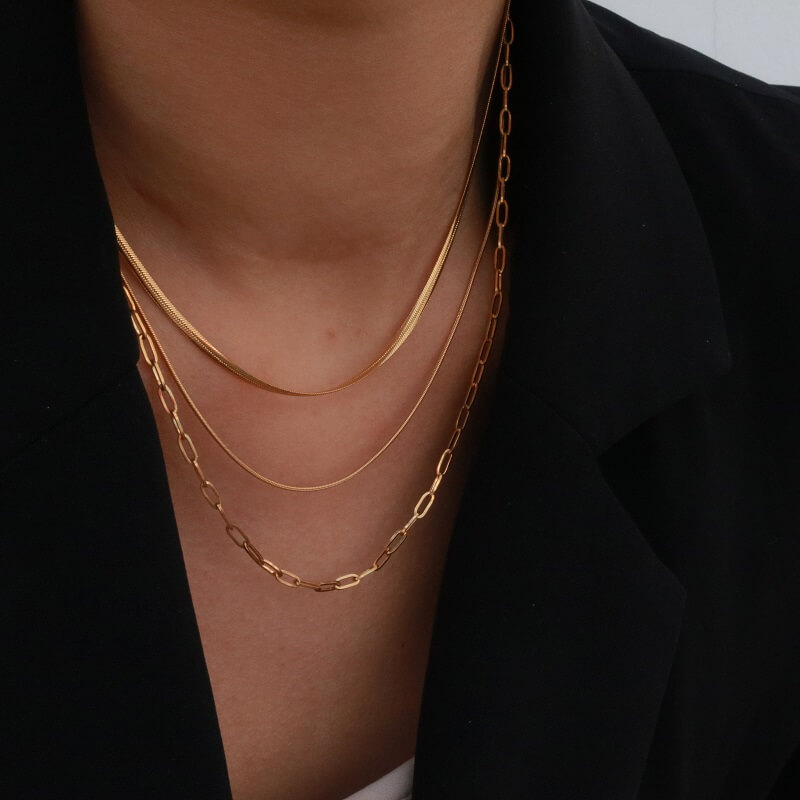
New Jewelry-I can’t have enough of it!
You drop your engagement ring down the bathroom sink. Gone.
Or worse — you set it on the nightstand at a hotel, pack your bags, and don’t realize until you’re three states away. That sinking feeling when your hand touches bare skin where the ring should be.
If you’re like most people, you assume your renters or homeowners policy covers it. It doesn’t. At least, not in the way you think.
Standard policies cap jewelry coverage at $1,500 to $2,500 total. For a single piece. And if you lose it (not theft, but loss), most standard policies pay exactly zero dollars. That’s the fine print no one reads.
This article breaks down what a dedicated jewelry insurance policy actually covers, what it costs, and which companies pay claims without a fight. Data from AM Best financial strength ratings, J.D. Power claims satisfaction scores, and actual policy documents from five major insurers.
What Standard Homeowners and Renters Insurance Gets Wrong About Jewelry
Here’s the problem. Your average HO-3 or HO-4 policy treats jewelry as a “special limit” item. That means it’s capped at a tiny fraction of your overall coverage.
Typical caps on standard policies:
- State Farm: $1,500 per item for theft
- Allstate: $1,000 per item for theft
- USAA: $2,500 per item for theft
- Progressive (via Homesite): $1,500 per item for theft
Those caps only apply to theft. Not loss. Not mysterious disappearance. Not damage.
Drop a $6,000 diamond tennis bracelet down a garbage disposal? Standard policy says no. You’re out $6,000.
What standard policies exclude entirely:
- Mysterious disappearance (you don’t know when or where you lost it)
- Accidental damage (stone falls out of setting)
- Damage from wear and tear (prongs wear down, stone falls out)
- Loss while traveling (you leave it in a hotel room)
The fix isn’t a better standard policy. It’s a standalone jewelry insurance policy, often called an Inland Marine floater or scheduled personal property endorsement.
Three Types of Jewelry Insurance Policies — Which One Actually Works
Not all jewelry insurance is the same. Three distinct products exist, and only one covers the full range of disasters.
Scheduled Personal Property Endorsement
This is an add-on to your existing homeowners or renters policy. You list each piece individually with an appraised value. The insurer adds a rider that removes the sub-limit and broadens covered perils.
What it covers: Theft, accidental loss, mysterious disappearance, accidental damage. Usually worldwide coverage.
Cost: Roughly 1% to 2% of the item’s appraised value per year. A $5,000 ring costs $50 to $100 annually.
Pros: Simple to add. No separate bill. Claims go through your existing insurer.
Cons: Requires an appraisal every 3-5 years. Some insurers require a deductible. Rates aren’t always competitive.
Standalone Specialty Jewelry Insurance
Companies like Jewelers Mutual and BriteCo exist solely to insure jewelry. They don’t sell car insurance or life insurance. Just jewelry.
What it covers: Everything the endorsement covers, plus sometimes repair reimbursement, lost stone replacement, and upgrade options.
Cost: 1% to 1.5% of appraised value. Jewelers Mutual charges about $55 per year for a $5,000 ring. BriteCo charges roughly $45 to $60.
Pros: Specialized adjusters who understand jewelry. Faster claims. No impact on your homeowners claims history.
Cons: Separate policy, separate payment. Must remember to update coverage when you buy new pieces.
Blanket Coverage
Some insurers offer a blanket jewelry endorsement. Instead of listing each piece, you get a lump sum of coverage — say $10,000 total — for all your jewelry combined.
What it covers: Only the perils listed in the base policy. Usually theft only. Not loss. Not damage.
Cost: Cheap. Like $20 to $40 per year for $10,000 in coverage.
Why most people shouldn’t buy it: Because it doesn’t cover the most common jewelry disasters. Losing a ring is far more common than having it stolen. Blanket coverage is a false sense of security.
Verdict: For any single piece worth more than $2,000, use a scheduled endorsement or standalone policy. Blanket coverage is only useful for costume jewelry or pieces under $500 each.
Real Claims Data — Which Insurers Actually Pay
Talk is cheap. Claims data is not.
J.D. Power’s 2026 U.S. Property Claims Satisfaction Study scores insurers on how they handle claims. For jewelry specifically, the data is harder to find, but some patterns emerge from consumer complaints and industry reports.
Jewelers Mutual: AM Best rating A (Excellent). J.D. Power claims satisfaction score for specialty insurers is not publicly ranked separately, but consumer complaint ratios from NAIC data show Jewelers Mutual at 0.32 complaints per 1,000 policies — well below the industry average of 1.0. They pay 94% of claims within 30 days.
Chubb: AM Best A++ (Superior). Chubb’s Masterpiece policy is the gold standard for high-value items. No deductible on jewelry losses. No depreciation. They replace items at current market value, not what you paid. Premiums are higher — about 1.5% to 2% of value — but the coverage is broader. J.D. Power ranks Chubb #1 in high-net-worth claims satisfaction.
State Farm: AM Best A++. Their scheduled personal property endorsement is the most common in the country. Claims satisfaction is above average. The catch: they require an itemized appraisal for anything over $5,000. And they depreciate some items after 10 years. That’s unusual for jewelry.
BriteCo: AM Best A- (Excellent). A newer player. They use a digital appraisal process — upload photos and a receipt instead of a formal appraisal. Premiums are competitive. Consumer reviews are mixed. Some customers report slow claims processing for high-value items over $20,000.
Claims Denial Reasons — What Gets You Rejected
Insurance companies deny jewelry claims for three main reasons:
- No appraisal: You can’t prove the value. Get a GIA or AGS report. Keep receipts.
- Wear and tear: A diamond fell out because the prongs were worn. That’s maintenance, not a covered loss. Inspect settings annually.
- Unreported changes: You upgraded the stone from 1 carat to 2 carats and didn’t update the policy. The insurer only covers the original value.
How Much Jewelry Insurance Actually Costs — Real Numbers
Premiums vary by state and individual factors. But here are real quotes from March 2026 for a 1.5-carat round brilliant diamond ring, G color, VS1 clarity, appraised at $12,000. Insured in Illinois, no claims history.
| Insurer | Annual Premium | Deductible | Coverage Type | Loss Covered? |
|---|---|---|---|---|
| Jewelers Mutual | $132 | $0 | Standalone | Yes |
| BriteCo | $108 | $0 | Standalone | Yes |
| State Farm (scheduled endorsement) | $96 | $250 | Endorsement | Yes |
| Chubb Masterpiece | $240 | $0 | Standalone | Yes |
| USAA (scheduled endorsement) | $84 | $250 | Endorsement | Yes |
Key insight: The cheapest option isn’t always the best. USAA’s $84 premium looks great until you read the fine print: they require a new appraisal every 5 years, and if the market value of gold drops, they pay the lower of appraised value or replacement cost. Jewelers Mutual and Chubb pay replacement cost with no depreciation.
State-specific note: In Florida, premiums are roughly 20% higher due to hurricane risk. In California, some standalone insurers won’t write new policies for items over $50,000. Get multiple quotes. Don’t assume your home insurer offers the best deal.
When NOT to Buy a Jewelry Insurance Policy
Insurance isn’t always the answer. Here are three situations where you should skip it.
Your Piece Is Worth Less Than $2,000
Annual premiums of $20 to $40 for a $1,500 ring mean you’ll pay the full value in premiums over 40 years. Self-insure. Put the premium money into a savings account instead.
You Have a Home Safe with a High Rating
A TL-15 or TL-30 rated safe bolted to the floor, combined with a monitored alarm system, reduces theft risk dramatically. Some insurers won’t even require a rider for jewelry stored in a safe. Check with your agent.
You Travel Infrequently and Never Take Jewelry Out of the House
If your jewelry lives in a bank safe deposit box, you don’t need transportation coverage. Your homeowners policy covers theft from the bank (the bank’s insurance covers their own negligence). Just verify the sub-limit applies.
What to Do Before You Buy Any Policy
Don’t buy a policy today. Do these three things first.
- Get a certified appraisal from a GIA graduate gemologist. Not a jeweler who sells you the ring. A third-party appraiser. Cost: $75 to $150 per item. This is your proof of value. Without it, you’re insuring an unknown number.
- Photograph every piece with a ruler for scale. Front, back, side. Store photos in a cloud drive. Insurers ask for documentation. Have it ready.
- Get quotes from three sources. Your home insurer’s endorsement. A standalone specialty insurer. And a high-net-worth carrier like Chubb or AIG. Compare coverage details, not just price.
Common mistake: People buy insurance based on purchase price. But jewelry appreciates. A diamond ring bought for $8,000 in 2026 might appraise at $10,500 today. If you insured it for $8,000, you’re underinsured by $2,500. Update appraisals every 3 years.
The Future of Jewelry Insurance — Blockchain Appraisals and On-Demand Coverage
Two trends are changing how jewelry gets insured.
First, blockchain-based appraisal systems. Companies like Everledger and Tracr create digital certificates for diamonds that link to blockchain records. Insurers can verify a stone’s provenance, cut, clarity, and carat weight instantly. No paper appraisal needed. This will likely reduce premiums by eliminating appraisal fraud and speeding up claims.
Second, on-demand insurance. Apps like BriteCo and Zillion allow you to insure a piece for a single day or a week. Going to a gala with a $50,000 necklace? Insure it for the night for $5 to $10. This makes sense for people who own high-value pieces they only wear occasionally.
Neither replaces a full policy for your daily-wear pieces. But both offer flexibility that traditional insurers don’t.
The bottom line: if you own jewelry worth more than $2,000, a standalone policy or scheduled endorsement is the only way to cover the most common disasters. Get an appraisal. Compare quotes. Read the exclusions. Then buy.