The Real History of Minimalist Fashion — And Why It Keeps Coming Back
You buy a white t-shirt, gray trousers, a beige coat. You put it on. Something is wrong. Not dramatically wrong — just flat. Generic. The opposite of what you were going for.
That gap — between minimalism as an idea and minimalism as a thing that actually works on a human body — exists because most people absorb the aesthetic without absorbing the logic underneath it. The logic has a history. And that history explains why certain people wear four pieces and look like they have taste, while others wear four pieces and look like they forgot to get dressed.
The Problem With Thinking Minimalism Means “Fewer Clothes”
Minimalism as a word got applied to fashion sometime in the 1980s. But the philosophy it describes is much older — and it was never primarily about clothing at all.
The Bauhaus school closed in 1933. Its influence on fashion never did.
The Bauhaus school, founded in Germany in 1919 by Walter Gropius, operated on a principle that stripped ornament away to find function. The school produced furniture, typography, and architecture — and a visual grammar that a generation of designers absorbed as their baseline. When the Nazis forced it to close and its faculty scattered across Europe and America, they brought those ideas with them.
You can trace a direct line from Bauhaus typography to the clean sans-serif branding Calvin Klein used in the 1980s. The aesthetic logic is identical: nothing extraneous. Every element earns its place.
“Less is more” was an architect’s rule, not a stylist’s
Ludwig Mies van der Rohe — another Bauhaus figure — coined “less is more” to describe structural architecture. The idea was that removing ornament reveals the quality of the underlying material and construction. A marble column needs no carving. A well-joined piece of wood needs no paint.
This is the principle that actually underlies expensive-looking minimalist fashion. When Jil Sander made a blazer with no lapel flourishes, no contrast stitching, no decorative buttons, she was forcing the viewer’s attention onto the cut, the fabric weight, the shoulder construction. There was nowhere else to look. Any imperfection would be naked.
That’s why cheap minimalism fails. It borrows the absence of decoration but cannot afford the quality that absence is supposed to reveal. The result is clothing that looks unfinished rather than precise.
The translation from architecture to clothing happened slowly
The first designers to apply structural reduction to fashion weren’t minimalists in the later sense. Coco Chanel in the 1920s removed the corset, shortened hemlines, and borrowed from menswear — not for aesthetic reasons, but out of a practical conviction that women’s bodies shouldn’t be architecture. Claire McCardell in the 1940s made affordable American sportswear that prioritized ease of movement over formal structure.
What these designers shared was a willingness to take things away. That habit — subtractive rather than additive design thinking — became the foundation that later minimalists built on.
The Five Designers Who Built the Minimalist Vocabulary

By the 1980s and 1990s, a specific group of designers had codified what minimalist fashion actually looked like. Understanding what each one contributed is clearer as a comparison than as a timeline:
| Designer | Key Decade | Core Contribution | Signature Approach | Still Relevant? |
|---|---|---|---|---|
| Calvin Klein | 1980s–1990s | Made minimalism commercial and American | Neutral palette, body-conscious cuts, provocative simplicity in advertising | Yes — the brand still references this era directly |
| Jil Sander | 1990s | Showed that restraint could be the ultimate luxury signal | Immaculate tailoring, zero decoration, premium fabrics | Yes — she returned to the brand in 2012 and again in 2026 |
| Helmut Lang | 1990s–2000s | Added an industrial edge; made minimalism urban and hard | Technical fabrics, asymmetry, deconstructed tailoring | Partially — the archive is influential; the current brand is inconsistent |
| Rei Kawakubo (Comme des Garçons) | 1980s–present | Challenged what a “complete” garment looks like | Deconstruction, monochrome, structural negative space | Yes — still the most intellectually rigorous version of this thinking |
| Donna Karan | 1980s–1990s | Made minimalism functional for working women | The “Seven Easy Pieces” system — interchangeable basics in a tight palette | Partially — DKNY carries the practical legacy more than the main line |
The important thing these designers don’t share: they weren’t doing the same thing. Calvin Klein’s minimalism is seductive. Jil Sander’s is cerebral. Helmut Lang’s is confrontational. Treating them as variations on a single aesthetic misses what made each one distinctive — and copy-resistant at the time.
Why the 1990s Were Minimalism’s Defining Decade
The 1980s in fashion were defined by excess: power shoulders, neon, logomania, Dynasty-on-a-budget styling. By 1990, there was a cultural appetite for the opposite. Minimalism gave that appetite a visual language.
The economics behind 90s minimalism
The early 1990s recession changed how luxury fashion needed to present itself. Visible wealth — fur, ornament, the conspicuous label — became uncomfortable to display. Quiet, considered dressing started to read as more sophisticated than obvious spending. This is almost exactly the pattern that produced the “quiet luxury” conversation in 2026 and 2026.
Jil Sander’s business during this period is instructive. Her prices were not low — a Jil Sander blazer in 1993 cost $800 to $1,200 — but the clothing broadcast nothing except quality. No logomania. No seasonal novelty. The person wearing it was supposed to be beyond all that.
Helmut Lang moved his operation from Vienna to New York in 1998, a shift that reshaped how the fashion industry itself worked. He was the first major designer to present his collection via direct mail to press and buyers rather than a traditional runway show. The format matched the aesthetic: stripped of spectacle, the clothes had to carry themselves.
How Calvin Klein’s campaigns changed what minimalism meant to everyone else
The Calvin Klein campaigns of the early-to-mid 1990s — featuring a young Kate Moss in 1992, shot by photographers including Herb Ritts and Steven Meisel — made minimalism aspirational for people who would never spend $600 on a pair of trousers. The look was accessible: undone, clean, lean. The jeans were Calvin Klein. The white t-shirt under them could be anything.
This is where minimalism split. There was the intellectual version — Jil Sander, Helmut Lang, Comme des Garçons — and the aspirational version: a clean, neutral, unfussy look that anyone could approximate at any price point. Both still exist. The gap between them explains most of the ongoing confusion about what minimalism actually is.
Japanese designers and the other kind of minimalism
Rei Kawakubo and Yohji Yamamoto had been showing in Paris since 1981, and their work challenged Western assumptions about clothing’s relationship to the body. Where Western minimalism tended toward clean, close-fitting silhouettes, Japanese minimalism worked with volume, asymmetry, and deconstruction — removing structural conventions rather than decorative ones.
This distinction matters. Minimalism isn’t just slim black trousers and a white shirt. It can be a coat with no center front seam, a dress that refuses to define the waist, a jacket deconstructed to its internal structure. The unifying thread is subtraction — but what gets subtracted varies enormously depending on which tradition you’re drawing from.
The One Thing That Separates Real Minimalism From Its Impostors
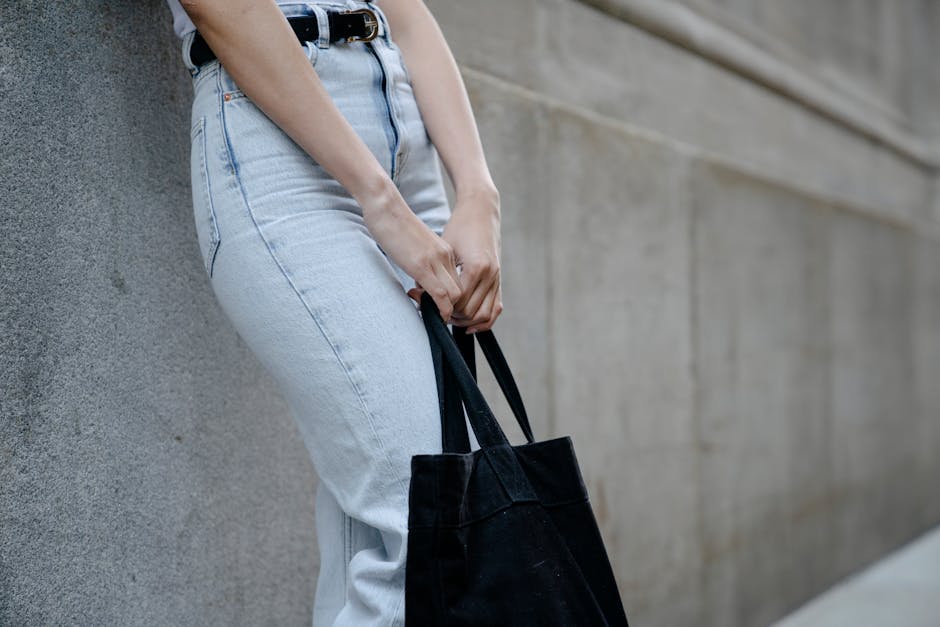
The tell is always the material. Real minimalist design puts quality into what remains. Cheap minimalism removes decoration but puts nothing in its place. If a garment looks unfinished rather than precise, the construction quality isn’t there to justify the absence of ornament. That’s not minimalism — it’s just emptiness.
What Fast Fashion Did to the Aesthetic — And What That Cost
By the mid-2000s, minimalism had become a mainstream style category. That reach came with real costs.
Did H&M’s COS line democratize minimalism or hollow it out?
COS launched in 2007 as H&M’s design-focused diffusion line — clean silhouettes, architectural shapes, a neutral palette. Prices run roughly £40–£150 for most pieces. The clothes look the part. But the construction quality can’t match what the aesthetic implies. A COS blazer at £120 looks minimalist. Worn for a year, it often doesn’t hold its shape the way the visual vocabulary promises.
That gap — between minimalism’s visual promise and its material reality at lower price points — has produced shoppers who feel confused about why their “minimalist” wardrobe doesn’t feel expensive. The answer isn’t more pieces. It’s the quality of the ones they have.
What gets lost in mass-market minimalism
- Fabric weight: A Jil Sander wool blazer from the 1990s has substantial body. Most contemporary high-street “minimalist” blazers are underlined but not fully canvassed, and that difference is visible in how they hang.
- Seam finishing: Turn a well-made minimalist garment inside out. The interior is as considered as the exterior. Fast fashion minimalism doesn’t hold up to that inspection.
- Color precision: The specific whites, creams, and off-whites that work in minimalist dressing are carefully calibrated. Generic “white” in synthetic blends reads as cheap rather than clean.
- Proportion specificity: Shoulder placement, trouser break, and sleeve length in high-end minimalist pieces are extremely precise. Off-the-rack interpretations get these proportions slightly wrong, which undermines the entire effect.
The logomania backlash cycle and where minimalism fits
Minimalism and logomania move in opposing cycles. When logo saturation peaks — as it did in the early 2000s with Dior monogram bags and LV logo-everything — minimalism gains appeal as a counter-statement. The 2026–2026 quiet luxury moment followed exactly this pattern: Supreme and Off-White logo culture reached saturation, and the market turned toward The Row and Loro Piana. It had happened before. It will happen again.
The Phoebe Philo Effect: Why One Designer’s Exit Became a Cultural Moment

Phoebe Philo’s tenure at Celine from 2008 to 2018 represents the most commercially successful and critically admired period of contemporary minimalism. Her departure — and Hedi Slimane’s subsequent pivot to a completely different aesthetic — produced one of the stranger phenomena in recent fashion history: a decade-long conversation about the absence of a designer’s work.
What Philo built at Celine was minimalism with warmth. The palette was neutral but not cold. The silhouettes were generous, not severe. The customer was a grown woman, not a concept. Key pieces from her era — the Trapeze bag, the Sangle Bucket, the Stan sneaker, various iterations of wide-leg trousers — still command significant resale premiums. A Phoebe Philo-era Celine jacket in good condition sells for $600–$1,800 on resale platforms in 2026, often above its original retail price.
Her independent label, launched in 2026, operates on extremely limited drops and very high prices — a trench coat at £3,600, a leather bag at £2,800. It’s simultaneously the clearest expression of her design philosophy and the most exclusive version of it. Minimalism as scarcity rather than minimalism as accessibility. Whether that’s a market experiment or a deliberate statement about who gets to participate is left to the buyer to decide.
The Brands Getting Minimalist Fashion Right in 2026
The Row is the current standard-bearer, and the gap between it and everything else is significant. Founded by Mary-Kate and Ashley Olsen in 2006, the brand has built a reputation for construction quality that actually justifies its prices. A The Row blazer retails at $2,100–$3,400. The interior construction, the fabric sourcing, the proportion work — it holds up to the scrutiny that minimalism demands. The waiting lists on certain styles are real, not manufactured.
Below that price point, a few brands are doing honest work:
- Toteme (Stockholm): Wool coats $600–$900, clean tailoring in natural fibers. Better construction than COS at a meaningful price step up. The Scarf Coat became a minor phenomenon for good reason — the proportions are genuinely considered.
- Lemaire (Paris): Christophe Lemaire’s approach leans into softness and layering rather than sharp tailoring. Trousers $350–$500, knitwear $400–$700. One of the few brands where the silhouette work is sophisticated enough to call it design rather than product.
- Studio Nicholson (London): More accessible — trousers $280–$420, shirts $180–$280 — with a focus on elevated basics in natural fabrics. A solid entry point for someone building a first serious minimalist wardrobe.
- Arket (H&M Group): The most honest high-street option. Better fabric transparency than COS, similar price range. Understands that minimalism requires getting proportions right, not just removing pattern.
The gap between The Row and Studio Nicholson — both operating in the minimalist space — is roughly $1,500 per piece. What you’re paying for at the top isn’t branding. It’s the margin of precision that the aesthetic requires to land correctly.
That precision is also what the entire history of minimalist fashion has been arguing for, from the Bauhaus onward: reduction only works when what remains is worth looking at.