Spring 2026 Fashion Over 50: Trends Worth Wearing Now
There’s a particular kind of frustration that comes with reading a spring trend report and finding nothing that applies to your actual life. The models are 24, the silhouettes assume a different body, and the “style tips for mature women” sidebar is always three bullet points about beige. It’s a waste of time dressed as fashion advice.
Spring 2026 is genuinely different territory. Several of the season’s biggest movements — soft tailoring, botanical prints, wide-leg trousers, linen everything — are actively better for women over 50 than they are for the crop-top crowd. The issue isn’t the trends. It’s knowing which ones require adaptation and which ones you can walk straight into your closet and own.
This is that guide. No vague encouragement to “wear what makes you feel good.” Just specifics: what’s working, what to buy, what to leave on the rack.
Why Most Spring Fashion Coverage Gets It Wrong for Women Over 50
Trend coverage is almost always written for a single body type in a single life stage. When the advice isn’t aspirationally young, it swings hard the other direction — toward shapeless cardigans and “classic” pieces so conservative they could double as a uniform for a 1995 bank lobby.
Both extremes miss the actual goal: looking current, put-together, and like yourself. That’s not an age-specific want. It’s a universal one.
What playing it “age-safe” actually costs you
Defaulting to age-safe choices — muted neutrals, midi hemlines locked at the same length since 2015, structured blazers from a previous decade — doesn’t make you look timeless. It makes you look like you stopped paying attention. The irony is that women who dress with obvious intention and specificity look more confident than those hiding behind the “appropriate” label.
Confidence has a look. Careful and tentative also has a look.
Spring 2026’s softer silhouettes and nature-influenced palette are genuinely forgiving terrain. You’re not fighting the season this year — you’re working with it.
The real problem is proportion, not age
Fashion mistakes that get blamed on age are almost always proportion mistakes. A wide-leg trouser that pools on the floor isn’t unflattering because the wearer is 55 — it’s unflattering because the hem is wrong. A flowy blouse that reads shapeless isn’t the wrong choice for someone over 50; it’s the wrong choice without something to anchor it.
Once proportion is the frame instead of age, the trend options open up considerably. That’s the lens this article uses throughout.
Why spring 2026 specifically is a good season for this demographic
Linen, relaxed tailoring, and botanical prints are all trending simultaneously. These aren’t micro-trends that peak in two months — they’re part of a broader shift toward natural fabrics and less constructed silhouettes that’s been building since 2026. Women who’ve been buying quality linen separates and well-cut trousers for years are suddenly exactly on-trend. That’s not an accident. It’s where fashion was always heading.
Spring 2026 Trend Breakdown: What Works, What Needs Adjusting, What to Skip
Not every trend translates across different bodies and lifestyles. Here’s a direct assessment of this season’s major movements.
| Spring 2026 Trend | Works Over 50? | The Adaptation | Skip If |
|---|---|---|---|
| Soft tailoring / unstructured blazers | Yes — strongly | Choose linen or silk blends over heavy canvas | Never skip — this is the season’s most universal trend |
| Wide-leg trousers | Yes | Pair with a fitted or tucked-in top; hem precisely to the right length | Ultra-wide palazzo cut on petite frames |
| Botanical and floral prints | Yes | Scale the print to your frame; avoid all-over busy patterns | Skip if also wearing statement jewelry — one focal point |
| Sheer layering | With conditions | Layer over a fitted slip dress or cami, not over nothing | Skip if the styling requires visible foundation garments |
| Muted pastels | Yes | Choose dusty, warm pastels — not icy or neon-adjacent versions | Head-to-toe matching pastel in a single shade |
| Ballet flats | Yes | Choose cushioned options: Margaux, Rothy’s, or Sam Edelman Felicia | Paper-thin soles if you’re on your feet for hours |
| Micro-mini hemlines | No | Take the same proportion in midi length instead | Skip entirely as-is — no adaptation makes this one work |
| Light-wash denim | Yes | Medium-high rise, straight or wide-leg cut | Ultra-low rise or skinny silhouettes |
The short version: this is an unusually cooperative season for women over 50. The only real landmines are the micro-mini and sheer-with-nothing-underneath styling that only functions in editorial contexts. Everything else is workable with minor adjustments or workable as-is.
The One Color Mistake Quietly Aging Most Spring Wardrobes
Defaulting to an all-neutral wardrobe doesn’t signal sophistication. It signals caution. Dusty sage, warm terracotta, soft mauve, and faded denim blue are spring 2026’s most wearable colors — and they’re flattering for women over 50 precisely because they’re not harsh. The mistake isn’t wearing color. It’s reaching for the same greige blazer every spring because color feels like a risk.
Pick one of those four. Start there.
How to Build a Spring 2026 Capsule That Actually Gets Worn
A capsule only works if every piece earns its place. The goal isn’t to own every trend — it’s to own six to eight pieces that rotate across multiple outfits without any single item becoming a burden. Here’s the structure that functions for spring 2026:
- One unstructured blazer in a neutral or soft color. Linen or a linen blend. It should go over everything: trousers, dresses, dark jeans. Eileen Fisher’s linen blazer (around $298) and Quince’s 100% European linen option (around $70) both deliver at their respective price points — the gap in quality doesn’t justify a $228 difference for most people.
- Two pairs of wide-leg or straight-leg trousers. One neutral (cream, oat, sand), one in a color or subtle print. Have them hemmed after purchase to the exact right length. This step alone changes how they photograph and how they feel to wear.
- Three tops that layer without bulk. A silk or satin cami in a neutral tone, a fitted ribbed tank, and one blouse with texture or print. All three should tuck easily into high-waisted bottoms. This trio generates more outfit combinations than any other category in the capsule.
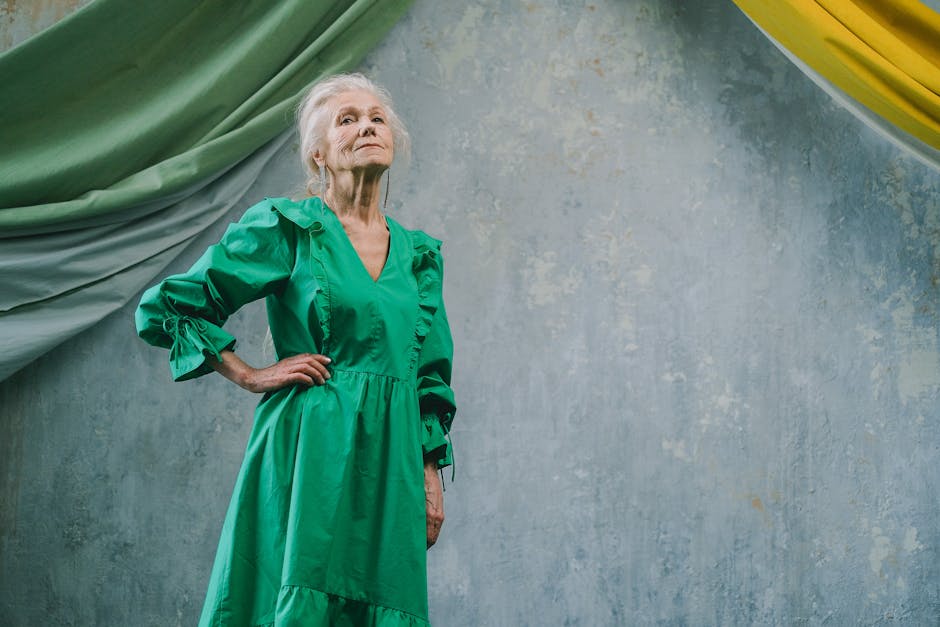
- One spring dress you can wear as-is or under a blazer. Midi length, fluid fabric. A wrap silhouette or V-neckline works across body types. The blazer-over-dress combination is one of spring 2026’s most reliably polished looks.
- Two pairs of shoes. One flat — ballet flat or loafer — and one low-heeled option for when you want lift without commitment. Don’t buy a shoe that requires breaking in. Spring doesn’t have patience for that.
- One bag in a natural material. Raffia, woven leather, or a structured linen tote. All three are prominent in spring 2026 and work across every formality level in the list above. A good natural-material bag also transitions into summer without any effort.
Eight items. Somewhere between 15 and 20 distinct outfits depending on how you layer and mix. The mistake most people make is buying nine variations of the same silhouette — three similar blouses, two near-identical blazers — and calling it a capsule. Variety of category matters more than variety of color.
Brands Getting Spring 2026 Right for Women Over 50
Most mainstream brands design for a 28-year-old body and make sizing adjustments as an afterthought. A few don’t. These are worth your time and money right now.
Eileen Fisher — the linen benchmark
Eileen Fisher’s entire brand philosophy aligns with what spring 2026 is asking for: soft structure, natural fabrics, minimal fuss. Their spring linen blazer (around $298) and wide-leg linen pull-on trouser ($248) are genuinely well-constructed. The brand runs in its own size system — check measurements rather than grabbing your usual size. They also operate a resale program called Renew if you want to test the brand at a lower entry price before committing to new.
Quince — quality without the retail markup
Quince sells directly and cuts out the middleman. Their European linen pants run around $50. Washable silk blouses are under $80. The quality consistently outperforms the price — not Vince-level construction, but significantly better than what you’d get from fast fashion at comparable cost. For building a spring capsule without overspending, Quince is the single most practical starting point right now. Their linen collection in particular is worth bookmarking.
COS — for clean silhouettes that don’t grip
COS specializes in garments with intentional shape that aren’t body-conscious. Their silhouettes are relaxed but deliberate, which makes them unusually flattering for women who want definition without anything clingy. The spring 2026 collection in chalk white and warm sand is worth browsing. Pricing runs $80–$250 for most pieces. One note: COS tends to size slightly large — going down one size is usually right.
J.Crew — better than it’s been in years
The Emile boyfriend blazer ($228) and J.Crew’s wide-leg linen trousers ($120) are two of the better value pieces this spring. The brand’s 2026 color palette — terracotta, soft denim, warm white — is restrained in a way that hasn’t always been true of J.Crew. Stick to their core tailoring and denim and avoid the micro-trend pieces. The quality has genuinely improved.
Lafayette 148 New York — for one investment piece
Higher price, but the construction justifies it. Their spring poplin shirts ($300+) and slim crepe trousers ($400+) are built to wear for a decade without looking dated. If you’re going to spend on one item this season, a piece from Lafayette 148 holds its value — as a garment and as a look — better than a similarly-priced piece from a brand chasing obvious trends. Their fit is designed for women who have been wearing tailored clothing for decades. That specificity shows in the cut.
What to Pass On This Spring
Should women over 50 wear the sheer fabric trend?
With conditions, yes. A sheer blouse layered over a silk cami or slip dress looks intentional and has a legitimate fashion history behind it. What doesn’t work is the editorial version: sheer over a visible bralette or styled as a standalone top. That version relies on a very specific body type and a very specific context neither of which applies to most real wardrobes. Adapt the trend — layer it — and it becomes genuinely elegant. Replicate the editorial version directly and it reads as a miscalculation.
Are ballet flats worth buying, or will this trend die by fall?
Ballet flats aren’t a trend. They’re a wardrobe staple that becomes fashionable in cycles. Buying a quality pair in a neutral — black, nude, or cognac — is never a mistake regardless of what the trend calendar says next season. Margaux’s The Ballet Flat ($285, available in 14 widths including half sizes) is the most precisely fitted option on the market. Rothy’s is washable and practical for travel. Sam Edelman’s Felicia ($80) is the right entry point if you’re testing whether you’ll actually wear the silhouette before investing more.
What about the crop top moment — does it apply at all?
The exposed-midriff version: skip it. But the cropped proportion is workable. A cropped blazer or a sweater that grazes the waistband belongs to the same trend family without the literal skin exposure. The underlying goal of the crop trend is a shorter top paired with high-waisted bottoms to create a defined waist. You get that effect with a well-fitted blazer or a half-tuck. Most women over 50 already know this intuitively — it’s worth naming directly anyway.
Spring 2026’s movement toward natural fabrics, relaxed tailoring, and restrained color isn’t a one-season pivot. It’s a longer-term direction that fashion has been building toward for several years. The brands investing in these materials and silhouettes — and the women who’ve been buying them quietly all along — are positioned well beyond this spring.