I Curated a 20-Item Work Wardrobe – Here’s How It Changed My Mornings
Three months ago, my closet held 87 pieces I could wear to the office. I owned four black blazers, seven pairs of black trousers in slightly different cuts, and a drawer of blouses I hadn’t touched since 2026. Every morning I stood there, pulled things on and off, and still arrived feeling like I’d dressed in the dark. So I did something drastic. I cut everything down to exactly 20 items — shoes included. This is what I learned, what I kept, and what I threw away.
The Exact 20 Items I Kept (and Why Each One Earned Its Spot)
I didn’t just grab random favorites. I tracked what I actually wore for two weeks. The data was brutal. I wore 14 pieces out of 87. The rest was expensive storage. Here’s the final list.
| Category | Item | Brand | Why It Stayed |
|---|---|---|---|
| Blazers (3) | Wool-blend single-breasted | Theory | $295, works with dresses and trousers, doesn’t wrinkle on the train |
| Linen unlined blazer | Everlane | $168, summer meetings, breathes like a shirt | |
| Black stretch crepe | Aritzia | $198, the one I wear 3x a week | |
| Trousers (4) | Wide-leg wool | Uniqlo | $59.90, machine washable, no dry cleaning |
| Straight-leg black | Madewell | $128, 10-inch rise, no gap at the waist | |
| Cropped cigarette | Theory | $220, goes with loafers and heels | |
| Pleated mid-rise | Everlane | $98, the only pair I travel in | |
| Blouses & Tops (5) | White silk shell | Equipment | $175, washes in a delicates bag, no hand-wash drama |
| Striped cotton popover | Madewell | $65, untucked with trousers = my uniform | |
| Black cashmere crewneck | Uniqlo | $79.90, 100% cashmere, survives 20 wears between washes | |
| Navy linen button-down | Everlane | $78, the one that doesn’t look slept-in after lunch | |
| Cream ribbed turtleneck | Aritzia | $88, layers under every blazer | |
| Dresses (2) | Black sheath | Theory | $260, client meetings, conferences, funerals |
| Knit midi | Aritzia | $148, Friday casual that passes for professional | |
| Shoes (3) | Black leather loafers | Everlane | $158, I’ve walked 2 miles in these without blisters |
| Nude pointed flats | Sam Edelman | $110, the only flat that stays on my heel | |
| Black block-heel pumps | Naturalizer | $129, 2.5-inch heel, can stand for 6 hours | |
| Outerwear (2) | Wool wrap coat | J.Crew | $298, covers everything, warm enough for 20°F |
| Black trench | London Fog | $180, rain, wind, and looks sharp over everything | |
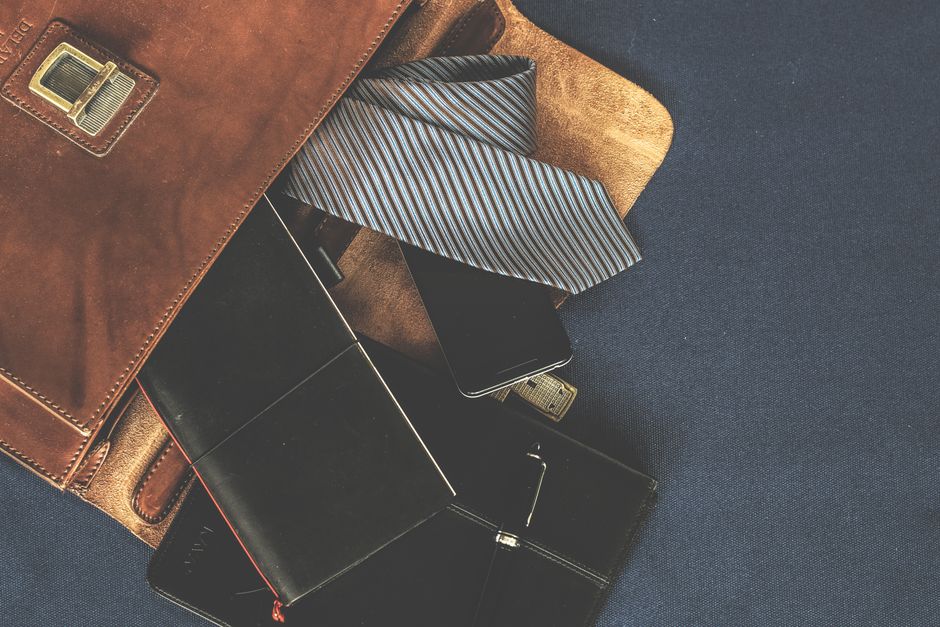
| Accessories (1) | Black leather tote | Everlane | $175, fits laptop + lunch + gym clothes |
Total cost: roughly $2,800. But here’s the thing — I already owned most of it. The curation wasn’t about spending money. It was about admitting that the other 67 pieces were never going to get worn.
Why 20 Items Fixed My Morning Panic
Before: 25 minutes staring at options. Three outfit changes. One frustrated text to my partner saying I had nothing to wear. Then I’d grab something that didn’t fit right and feel off all day.
After: I grab a blazer, a top, and trousers. It takes 3 minutes. Every combination works. Not “looks okay” — actually works. The black wool trousers hit the same spot with every top. The sheath dress slides on without adjustment. The loafers don’t rub because I’m not breaking in new shoes every Tuesday.
This isn’t about being minimalist for its own sake. It’s about removing the cognitive load of choice. I have 20 items. I know each one. I know how it fits, how it feels at 4 PM, and whether it wrinkles in a tote. That knowledge is worth more than 67 extra options I don’t trust.
The math on decision fatigue
With 87 items, I had roughly 1,500 possible outfits (assuming 3-piece combinations). That’s too many for a human brain to evaluate in 5 minutes. With 20 items, I have 114 combinations. Still plenty of variety. But small enough that I can mentally scan all of them in seconds.
What I stopped buying
Patterned blouses. Printed trousers. Anything that only worked with one specific bottom. Statement sleeves. Anything dry-clean only. Anything that needed “the right bra.” If an item couldn’t be worn with at least 3 other pieces in my wardrobe, it didn’t make the cut.
The Three Biggest Mistakes People Make When Curing a Work Wardrobe
I messed up twice before getting this right. Here’s what went wrong.
Mistake 1: Keeping clothes you “might” wear. I had a gray pinstripe blazer I hadn’t touched in 18 months. “But it’s classic,” I told myself. Classic doesn’t mean useful. If you haven’t worn it in 12 months of real life (not pandemic lockdown), donate it. I finally did. Didn’t miss it once.
Mistake 2: Buying for the job you want, not the job you have. I owned three silk blouses that needed hand-washing and steaming. I work in a mid-rise building with a 45-minute commute. Those blouses stayed in the closet because I never had the energy to care for them. My Uniqlo cashmere? I throw it in a delicates bag and wash it on cold. I wear it twice a week.
Mistake 3: Ignoring your actual dress code. My office is “business casual with some flexibility.” I kept a sequined shell because “maybe for a holiday party.” I wore it zero times in two years. Be honest about what you actually need. If you never wear blazers, don’t keep four of them. If you live in dresses, keep five dresses and two pairs of trousers.
How to Build Your Own 20-Item Work Wardrobe in One Weekend
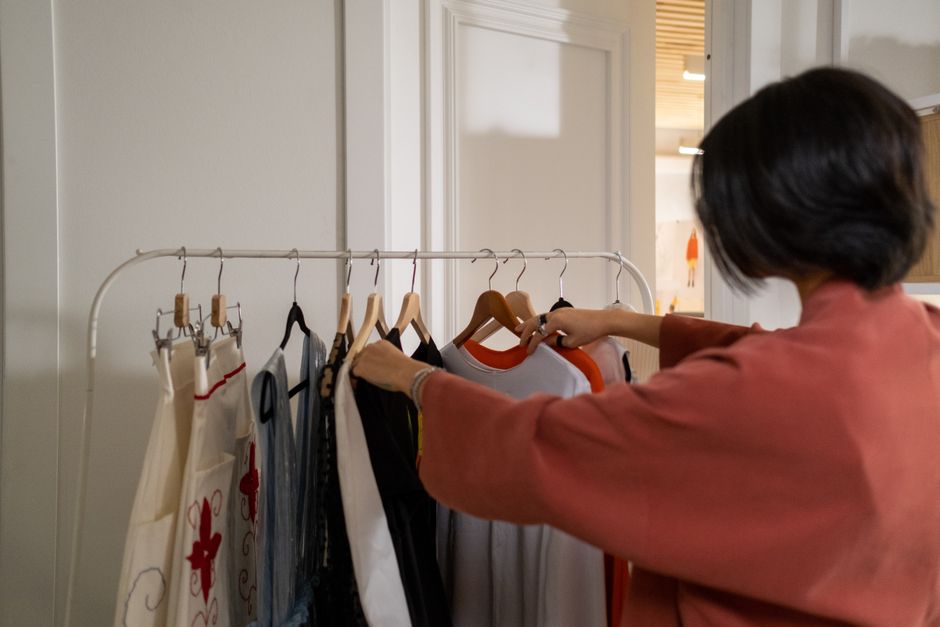
You don’t need to buy anything new. You need to sort, test, and cut. Here’s the process I used.
- Pull everything you could wear to work. Every blazer, trouser, skirt, dress, top, shoe, and bag. Pile it on your bed. Don’t exclude anything yet.
- Try on every single piece. Not just hold it up. Put it on. Look in the mirror. Ask: Does this fit comfortably right now? Not “if I lose 5 pounds.” Not “if I get it tailored.” Right now. If no, it goes.
- Check for damage. Pilling, stains, loose buttons, frayed hems. If it needs repair, put it in a separate pile. If you haven’t repaired it in 6 months, it’s not getting repaired. Toss it.
- Track your actual wear for 2 weeks. This is the painful part. Every morning, write down what you put on. At the end of 2 weeks, look at the list. Anything you didn’t wear is a candidate for removal.
- Apply the 3-3-3 rule. Each item must work with at least 3 other items in your wardrobe. A black blazer works with all 4 trousers and both dresses. A cream tweed blazer only works with one pair of trousers? Out.
- Cut to 20. Be ruthless. You can always add something back later. But you can’t know what you actually need until you’ve lived with less.
I did this on a Saturday. By Sunday night I had a donation pile of 67 items. I dropped them at a local women’s shelter. Felt better than any shopping trip I’ve ever taken.
When a Capsule Wardrobe Is NOT the Right Answer
I’m not going to tell you this works for everyone. It doesn’t. Here’s when you should keep more than 20 items.
Your body changes frequently. If you’re pregnant, postpartum, going through menopause, or on medications that affect weight, a rigid capsule will frustrate you. Keep a broader range of sizes. A 40-item wardrobe with 3 sizes is more useful than 20 items that don’t fit.
Your dress code varies wildly. If you go from a construction site to a client dinner in the same day, you need separate sets. A 20-item wardrobe assumes one dress code. If you need steel-toe boots and a suit, you need at least 30 pieces to cover both worlds.
You genuinely enjoy fashion as a hobby. Some people love getting dressed. They enjoy the variety, the color, the experimentation. If that’s you, a capsule will feel like a cage. Keep your 100+ pieces. Just accept that mornings will take longer. That’s a tradeoff, not a failure.
For me, fashion is not a hobby. It’s a tool. I want it to work and then get out of my way. The 20-item wardrobe does that. If you feel the same, try it for 30 days. You can always go back to the chaos.
The One Thing Nobody Tells You About Cutting Your Wardrobe

You’ll feel stupid for owning so much stuff you didn’t need. That’s normal. I felt it too. Don’t beat yourself up. The fashion industry spends billions convincing us that we need new things every season. It’s designed to make us feel incomplete. Breaking out of that takes active effort.
What surprised me most was how little I think about clothes now. I used to scroll through online stores during lunch. I’d buy something, wear it once, and feel disappointed. Now I look at my 20 pieces and feel satisfied. Not because they’re fancy. Because they’re mine. I chose each one. I know exactly why it’s there. And every morning, I grab three things and walk out the door without a second thought.
That’s the real win. Not the closet. The headspace.