Inclusive Sizing Fashion: Inclusive Sizing in Fashion: What 67% of Shoppers Get Wrong
Walk into any mall and count the mannequins. Most are a sample size 4. Now check the average American woman — she wears a size 16 to 18. That gap is not a minor oversight. It’s a $175 billion market that the fashion industry has treated as an afterthought for decades. Inclusive sizing is not about adding a few XXL tags. It’s about fundamentally rethinking how clothes are designed, graded, and marketed. Here’s what you actually need to know before you spend another dollar on clothes that were never built for your body.
Why Most Size Charts Are Actively Misleading You
Brands publish size charts because they have to. But those charts are often based on a single fit model — one person whose measurements define an entire size range. When a brand says its size 14 has a 40-inch hip, that number came from one woman standing in a New York showroom 15 years ago. It does not reflect the actual diversity of bodies wearing that tag today.
The result is size inconsistency. A size 16 at Old Navy fits differently than a size 16 at Talbots, which fits differently than a size 16 at Universal Standard. This is not a quality problem. It’s a grading problem. Most brands use a linear grading system — add 1 inch to the bust, 1 inch to the waist, 1 inch to the hip for each size up. But real bodies do not scale evenly. A woman who wears a size 20 may have a 32-inch waist and 50-inch hips. Linear grading produces a tent-like shape that fits no one.
What to do instead: Ignore the tag number. Measure your bust, waist, and hip with a soft tape measure. Compare those numbers to the brand’s actual garment measurements, not the size chart. Many brands now publish finished garment measurements on their site. Use them. If a brand doesn’t publish them, email customer service. If they can’t provide them, shop elsewhere.
The Vanity Sizing Trap
Vanity sizing is when a brand labels a garment smaller than it actually is. A size 8 dress from Brand A might have the same waist measurement as a size 12 from Brand B. This feels good in the fitting room but creates chaos when you shop across brands. You end up owning clothes in four different sizes, none of which tell you anything about your actual body.
The Missing Middle
Most brands that claim to be size-inclusive stop at 3XL or size 24. That leaves out roughly 20% of women who wear sizes 26 and above. True inclusive sizing extends to at least size 40. Brands like Universal Standard and Dia & Co offer up to size 40 and beyond. If a brand stops at 24, they are not size-inclusive. They are size-adjacent.
The Three Failures That Make Inclusive Clothes Look Bad
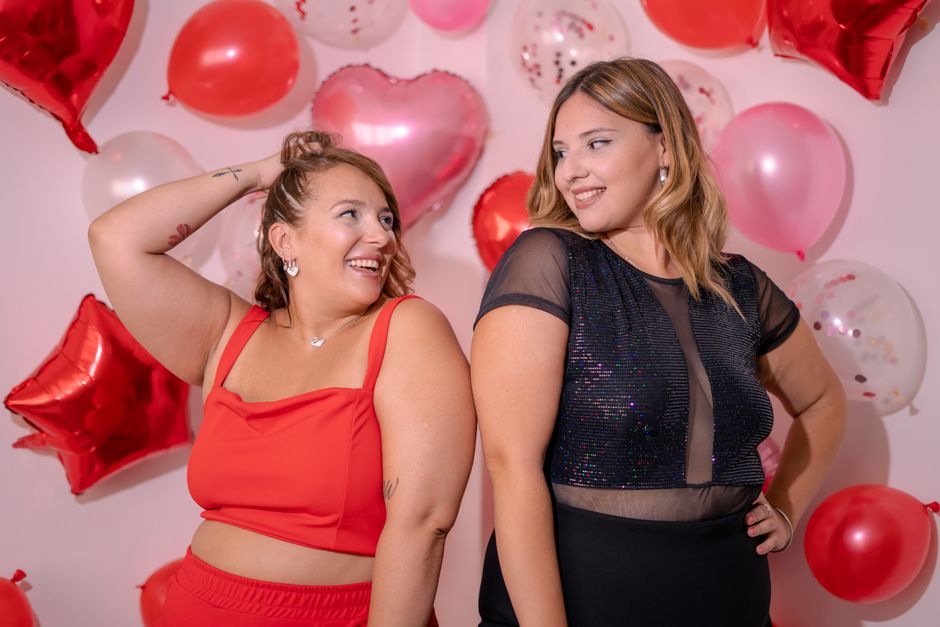
Inclusive sizing is not just about making bigger versions of the same pattern. That approach produces clothes that look shapeless, baggy, or unflattering. Here are the three most common failures you will encounter.
Failure 1: The tent effect. When a brand simply scales up a straight-cut dress, it loses all waist definition. The result is a garment that hangs like a trash bag. Brands that do this correctly add darts, princess seams, or elastic panels to maintain shape across sizes. Universal Standard’s Geneva Dress ($98) uses a hidden waist cinch and structured knit fabric that holds its shape from size 00 to 40. That’s intentional design, not scaling.
Failure 2: Sleeves that strangle. Upper arm circumference is one of the most commonly miscalculated measurements. A size 20 woman may have a 16-inch upper arm, but the scaled-up pattern gives her a 13-inch sleeve opening. The fix is simple: brands should grade sleeve width independently from the body. Everlane’s oversized blazers ($198) account for this with a generous armhole cut that works from XS to 3XL.
Failure 3: Collar gap. As bust size increases, the distance between the collar and the bust point changes. A straight scale-up creates a gap at the neckline where the fabric pulls away from the chest. Brands that use a graded block pattern — where the collar angle shifts with each size — eliminate this problem. Look for brands that mention “graded block” or “fit testing on multiple body types” in their sizing information.
Brands That Actually Deliver: A Comparison Table
Not all inclusive sizing is created equal. The table below compares five major brands across the factors that actually matter: size range, grading method, fabric quality, and return policy.
| Brand | Size Range | Grading Method | Fabric Quality | Return Policy |
|---|---|---|---|---|
| Universal Standard | 00–40 | Graded block for each size | Premium knit, ponte, denim | Free returns within 30 days |
| Talbots | 0–26 | Linear scaling | Mid-tier cotton, polyester blends | Free returns within 60 days |
| Madewell | XXS–3XL | Linear scaling with plus fit | Mid-tier denim, linen | Free returns within 30 days |
| Old Navy | XS–4XL | Linear scaling | Budget-friendly, varies by line | Free returns within 45 days |
| Girlfriend Collective | XXS–6XL | Graded block for activewear | Recycled polyester, compressive | Free returns within 30 days |
Our pick: For everyday basics and denim, Universal Standard wins on fit consistency and fabric quality. Their Fit Liberty program lets you exchange any item for a different size within a year, even if you’ve worn it. That’s a level of commitment no other brand matches.
When NOT to Buy Size-Inclusive: The Tradeoffs
Inclusive sizing is not always the right choice. Here are three situations where you should skip a size-inclusive brand and buy elsewhere.
Situation 1: You need extreme tailoring. If you require a custom-fit evening gown or a structured blazer with precise shoulder seams, a size-inclusive brand may not have the construction expertise. Go to a tailor or a made-to-measure service like eShakti ($40–100 per garment), which adjusts patterns to your exact measurements.
Situation 2: You prioritize trend speed over fit. Fast-fashion brands like Shein and Zara offer sizes up to 4XL, but their grading is notoriously sloppy. You’ll get a trendy piece that fits poorly and falls apart after three washes. If you want a specific trend, buy from a brand that specializes in that category. For example, Girlfriend Collective makes excellent inclusive activewear, but you wouldn’t buy their blazers.
Situation 3: You are between sizes in a brand that uses linear grading. Linear grading means the difference between a size 14 and a size 16 is exactly 1 inch everywhere. If your bust measures 42 inches and the size 14 bust is 41 inches while the size 16 is 43 inches, neither fits well. Look for brands with half-size options or adjustable features like elastic panels or wrap closures. Universal Standard’s Seamless Bodysuit ($75) has a cross-back design that stretches to accommodate a range of measurements within each size.
The One Measurement That Predicts Fit Better Than Any Other
Forget bust, waist, and hip for a moment. The single most predictive measurement for how a garment will fit is the shoulder-to-waist length. This number determines where the waist seam hits, how the bust darts sit, and whether the hem falls at the right point.
Most size charts ignore this measurement entirely. Brands assume a standard torso length of roughly 17 inches from shoulder to natural waist. But real women vary from 14 to 20 inches in this measurement. If your torso is shorter or longer than average, the garment will pull, gap, or bunch at the waist.
How to fix it: Measure from the bone at the top of your shoulder (where a bra strap sits) straight down to your natural waist (the narrowest part of your torso). Compare that to the brand’s garment length measurement, which is usually listed as “center back length” or “body length.” If the difference is more than 1.5 inches, the fit will be off. Brands that include this measurement in their size charts — like Universal Standard and Girlfriend Collective — are signaling that they understand real bodies.
Why Petite and Tall Lines Matter
Inclusive sizing without petite or tall options excludes women who are shorter than 5’4” or taller than 5’9”. A size 18 dress cut for a 5’8” model will drag on the floor for a 5’3” woman. Brands like Old Navy and Madewell offer petite and tall versions of their inclusive sizes. Universal Standard does not have separate petite or tall lines, but their garments are designed with adjustable hems and longer torsos that can be altered. If you are outside the average height range, prioritize brands with dedicated petite or tall options.
The Future Is Not a Size Tag
Inclusive sizing is not a trend. It is a correction to a market failure that has lasted 70 years. The brands that survive this shift will be the ones that invest in graded block patterns, publish finished garment measurements, and hire fit models across the size spectrum. The brands that don’t will lose a generation of customers who have learned to read size charts the same way they read fine print — with skepticism and a tape measure.
You don’t need to buy from every brand that claims to be inclusive. You need to buy from the brands that prove it. Measure yourself. Compare garment measurements. Demand better fit. And when you find a brand that delivers, stick with them. That is the only signal the industry will listen to.